It's been few months since I started my own entrepreneurial journey. While I have nothing to complain and my enthusiasm continues to be at the levels where I started, I learned something which I completely ignored and underestimated.
It would not be too far-fetched to say that I forgot one of the most important ingredients to be successful in Indian market.
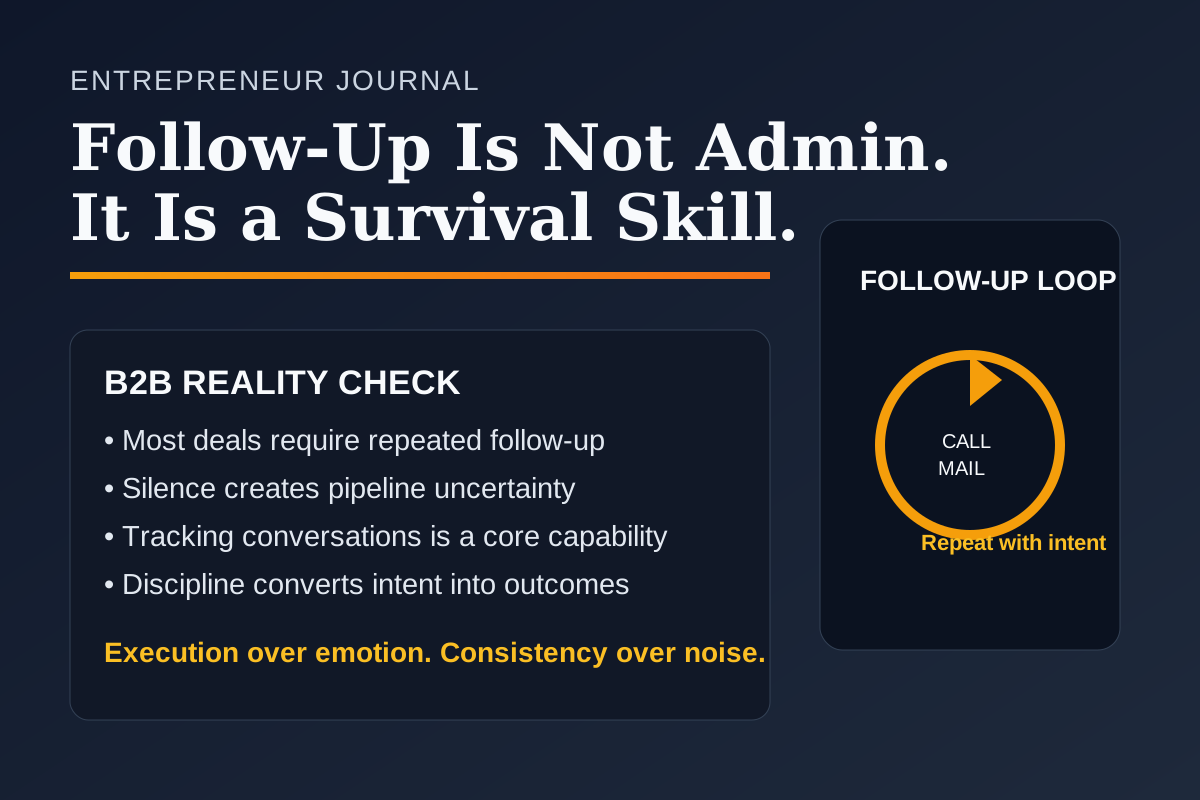
That ingredient is FOLLOW-UP. Sounds simple? Silly? Rubbish? True, but a reality that one must accept to avoid frustrations.
Here is a small story:
For my product TalentOjo.com, I reached out to my friend Raj, a senior operations manager who worked for a multinational firm in Pune. Raj realized that this product would be invaluable for the company where he worked, and he happily introduced me to the Head of HR, Sameer.
After the demonstration, Sameer said he loved the product. He asked for some time to internalize this with his team in India and the US and get back to me. After agreeing to run a no-cost pilot to appraise everyone with the product, I happily waited for some days, but no reply.
I started following up. After a few phone calls and messages, I learned that Sameer was out of the office and would get back to me in another week. Another week went by, but no news from Sameer. A series of phone calls, messages, and emails were of no use. It only helped grow my frustrations and my follow-up list every time.
While this should be considered unprofessional and somewhat linked with the difficulty of saying no in Indian culture, it is important to highlight the fact that this happens with almost 90 percent of prospects.
As your sales pipeline grows, the number of follow-ups goes up. Very rarely in a B2B scenario does a long-awaited call come without follow-up.
There have been times where more than 50 percent of the time goes only in follow-ups with prospects. Needless to say, you need really smart ways to remember all conversations, follow-up dates, email trails, and much more.
Over the last few months, follow-up has almost become a skill set, which I try to check in potential business development candidates.
This is one ingredient one must learn to have to be happy and survive in the Indian entrepreneurial fraternity.
Are you an entrepreneur? What has been your experience?